Bound by the Nest: The Hidden Psychology Behind Sports Fandom's Most Unbreakable Bonds
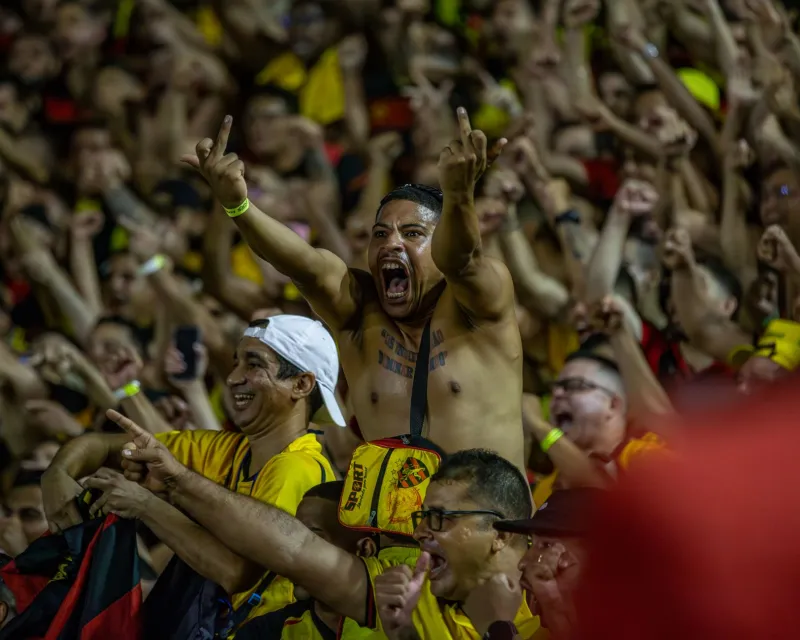
There is a moment — familiar to anyone who has ever worn a jersey to a stadium, painted their face in team colors, or stayed up past midnight refreshing a trade-deadline ticker — when fandom stops being entertainment and becomes something far more personal. It becomes identity. It becomes tribe. It becomes, in the truest sense of the word, loyalty.
At Falcon Club, we understand this transformation intimately. Our community was built on the belief that the most meaningful connections in sports happen not in the stands, but in the spaces between — the locker room conversations shared only with members, the insider intelligence that separates the devoted from the casual, the rituals that bind a community together across geography and generation. What we have come to understand is that this kind of fierce loyalty is never accidental. It is engineered, deliberately and methodically, by the franchises and communities that have mastered the art of belonging.
The Architecture of Allegiance
Sports psychologists have long recognized that fan loyalty operates on the same neurological pathways as familial attachment. Dr. Daniel Wann, a researcher at Murray State University and one of the foremost authorities on sports fandom, has spent decades documenting how identification with a team satisfies fundamental human needs: belonging, self-esteem, and a sense of purpose larger than oneself.
The franchises that cultivate the most devoted followings — the Green Bay Packers, the Dallas Cowboys, the Pittsburgh Steelers — have understood this intuitively, even before the language of behavioral psychology existed to describe it. They do not simply sell tickets. They sell membership in something that matters.
Consider the Packers, a franchise uniquely positioned as a community-owned entity in Green Bay, Wisconsin. Their stock ownership model — largely symbolic in financial terms — generates extraordinary emotional investment. Shareholders do not receive dividends or profit shares. What they receive is something far more valuable: the feeling of genuine ownership, of being inside the circle rather than outside it. The waiting list for season tickets has, at various points, exceeded 130,000 names. Fathers pass spots to children as inheritance. This is not consumer behavior. This is devotion.
Exclusivity as the Engine of Desire
One of the most counterintuitive truths in fan community psychology is that restriction amplifies desire. When access to something is limited — whether that is a seat in a premium club section, an invitation to a pre-game locker room walkthrough, or membership in a private community of fellow devotees — its perceived value increases exponentially.
The New England Patriots dynasty years offer a compelling case study. During their run of dominance from 2001 through the late 2010s, the organization cultivated a culture of internal secrecy — the famous "Do Your Job" ethos — that extended outward to the fan base. Supporters were not merely watching a football team. They were participants in something that felt deliberately exclusive, a community of the knowing, distinct from the rest of the league's followers. Season ticket holders in premium sections were granted access to events, content, and interactions unavailable to general admission attendees. The result was a tiered community with fierce loyalty at every level, but particularly intense devotion among those closest to the inner circle.
Shared Identity and the Power of Ritual
Beyond exclusivity, the most enduring fan communities are built on shared ritual — the repeated behaviors and symbols that reinforce collective identity. NFL franchises invest heavily in these touchpoints, often more deliberately than their public communications suggest.
The "Dawg Pound" in Cleveland. The "12th Man" tradition in Seattle. The tailgate culture surrounding the Kansas City Chiefs at Arrowhead Stadium, consistently rated among the loudest venues in professional football. Each of these phenomena represents a community that has developed its own internal language, its own symbols, its own rites of passage. Newcomers must learn them. Insiders already know. That gradient of knowledge creates a natural hierarchy of belonging that reinforces loyalty at every tier.
For those building their own communities — whether around a sports franchise, a shared passion, or a niche interest — the lesson is clear: ritual is infrastructure. The repeated gesture, the inside reference, the annual tradition that members look forward to — these are not peripheral flourishes. They are the load-bearing walls of community.
Insider Access as Currency
In an era of unprecedented media saturation, genuine insider access has become one of the most valuable commodities a community can offer. When information is available everywhere, the truly rare thing is information available only here.
Elite fan communities understand this dynamic. The most devoted supporters of any franchise are not simply consuming more content than casual fans — they are consuming different content. Behind-the-scenes footage, direct access to players and coaches, early intelligence on roster moves, exclusive merchandise drops, and private events create a layered experience that rewards depth of commitment.
At Falcon Club, this principle shapes everything we build. Our members do not receive more of what everyone else gets. They receive access to what no one else can reach — the conversations, the intelligence, and the community that exists only inside the circle.
Building Your Own Inner Circle
The principles that govern the most loyal fan bases in American sports are neither mysterious nor proprietary. They are replicable, provided one is willing to invest in the architecture of belonging rather than simply the mechanics of content distribution.
Begin with shared identity. Define clearly who your community is for — and by implication, who it is not for. Exclusivity begins with definition. Establish rituals early, and protect them fiercely. Create tiers of access that reward deeper commitment with richer experiences. And above all, ensure that those inside your circle feel genuinely known, genuinely valued, and genuinely different from those who have not yet earned their place.
The falcon, as a symbol, does not soar indiscriminately. It selects its moment, its altitude, and its company with precision. The communities that endure — in sports, in culture, in any domain worth belonging to — operate by the same standard.
Loyalty, at its deepest, is not given. It is earned, cultivated, and fiercely protected. That is the code. That is the standard. And for those who understand it, there is no more powerful force in American sports culture.