Ninety Miles an Hour and No Excuses: The Peregrine's Case for Relentless Precision
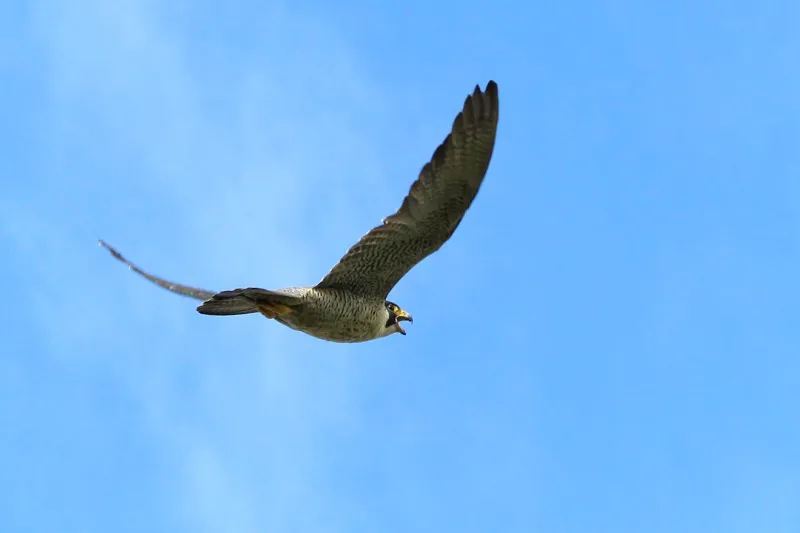
Somewhere above a Midwestern prairie right now, a peregrine falcon is folding its wings and beginning a stoop — a hunting dive that will carry it toward its prey at speeds exceeding 240 miles per hour. Nothing else in the animal kingdom moves that fast. Nothing else needs to.
We put this bird on our masthead for a reason, and it is not aesthetic. The peregrine represents a philosophy of excellence that American culture, for all its obsession with hustle, has largely forgotten. It is worth articulating plainly.
Speed Without Preparation Is Just Chaos
The stoop looks effortless from the ground. It is anything but. A peregrine climbs to altitude first — sometimes a mile up — spending energy on positioning before spending any on pursuit. It reads the wind. It calculates the intercept angle. Only then does it commit, and once committed, there is no second dive.
Contrast this with how we celebrate effort in sports and business. The narrative we prefer is grinding, visible struggle — the fourth-quarter comeback, the founder sleeping under the desk. But elite performers across domains understand what the peregrine understood first: the decisive moment is brief, and everything that matters happens before it. Preparation is invisible. Positioning is unglamorous. Both are everything.
The Kill Zone Is Small. So Is the Window.
A peregrine's talons deliver force through a clenched fist-like strike, hitting a target often smaller than a football. The margin for error is measured in inches at 200 miles per hour. Raptors miss, and when they miss, they often don't eat that day.
High-performers talk endlessly about resilience — the ability to recover from failure. The falcon suggests a complementary virtue that gets less airtime: precision that makes failure rare. In American business culture, we forgive sloppiness if the intent was bold. The falcon's ledger is less sentimental. Intent does not feed the nest. Execution does.
Patience Is a Weapon, Not a Weakness
Watch a falconry session and the most striking thing is how little happens. The bird waits. It circles. It holds position on a thermal, sometimes for an hour, for a window of seconds. Falconers call this 'waiting on,' and it is considered the highest expression of the craft — a bird disciplined enough to choose its moment.
Our economy rewards motion. Founders ship fast, athletes play through injury, executives answer email at midnight. But the communities and competitors who actually dominate — the dynasty franchises, the category-defining companies — tend to be the ones willing to circle longer than everyone else and strike only when the geometry favors them.
Loyalty With Teeth
Here is the trait that makes the peregrine the right emblem for an elite community: it pairs ferocity with fidelity. Peregrines are famously monogamous, returning to the same territory and the same mate season after season, defending that ground against all comers. Fierce commitment and fierce loyalty are not opposing instincts. In the wild, they are the same instinct.
That is the standard we hold up for our own community and, frankly, for anyone assembling a team, a company, or a fanbase worth belonging to. Belonging that costs nothing protects nothing. The falcon does not share its hunting ground with the indifferent.
The Standard Worth Copying
So take the lesson from the fastest animal on Earth, whether you are chasing a championship, a market, or simply a better version of yourself. Climb before you dive. Aim before you strike. Wait for the window, then commit without hesitation. And once you've claimed your territory — your team, your craft, your people — defend it with everything you have.
Speed gets the headlines. Precision wins the day. The peregrine has known this for millions of years. It's time more of us caught up.